Cross-platform multiplayer VR team-building platform
The studio's largest R&D project, publicly co-funded: groups meet in shared VR spaces as avatars and take on cooperative challenges, while people on desktop or phone watch and talk to them in real time.
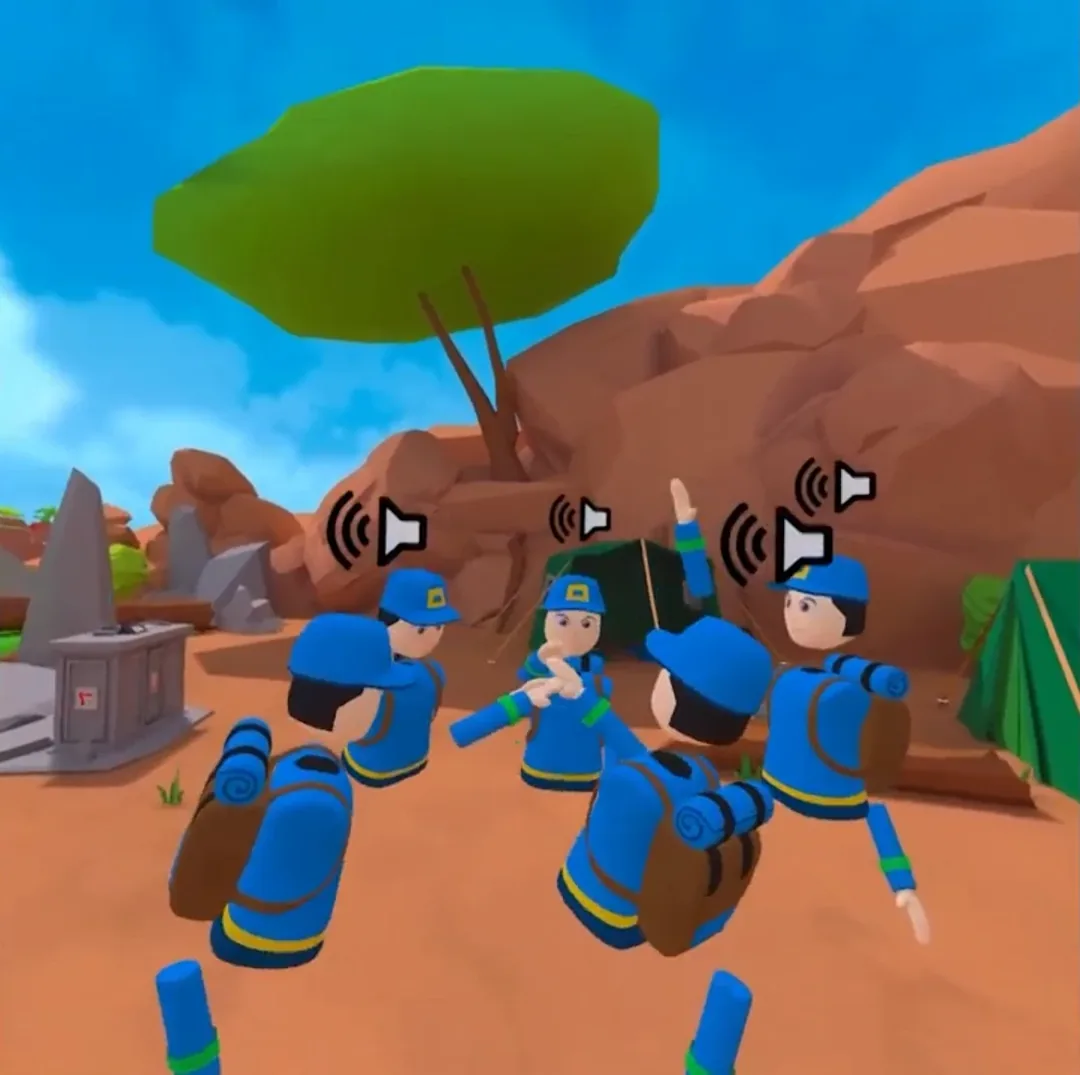
What it is
A multiplayer VR experience for companies. Teams join a shared session, each person embodied as an avatar, and progress through challenges that only work if the group cooperates.
How sessions work
- Automatic lobby. Anyone with access to the app joins a shared lobby room automatically when they launch it.
- Teams formed in-game. Players split into teams inside the lobby, in VR, before the challenges start.
- Lobby per client. A second version separated the lobby by client and access type, so different companies' groups never met in the same room.
Cross-platform spectators
A desktop and Android version let people outside VR follow a session live. They could switch between a god view and fixed security-camera angles, and talk to the players in VR over voice chat. VR, PC and smartphone clients all shared the same multiplayer session.
Stack
Unity and Photon PUN 2 for networking, with the same room logic serving VR headsets, Windows and Android.
Session flow: automatic lobby, in-game teams, and non-VR spectators connected to the same room.